Verse of the Week 2 – The Tongue
Season #5
Ahmad Moana
La langue fabrique de nouvelle papilles gustatives environ toutes les deux semaine.

زينب تقي
هل تعلم يبلغ طول لسانك عادة أربع بوصات، وهو تقريبًا بنفس حجم سحلية فلوريدا المتوسطة يمكن للسانك أن يقول أكثر من 90 كلمة في الدقيقة لديك ما بين 3000 إلى 10000 براعم تذوق
لجين الاشيقر
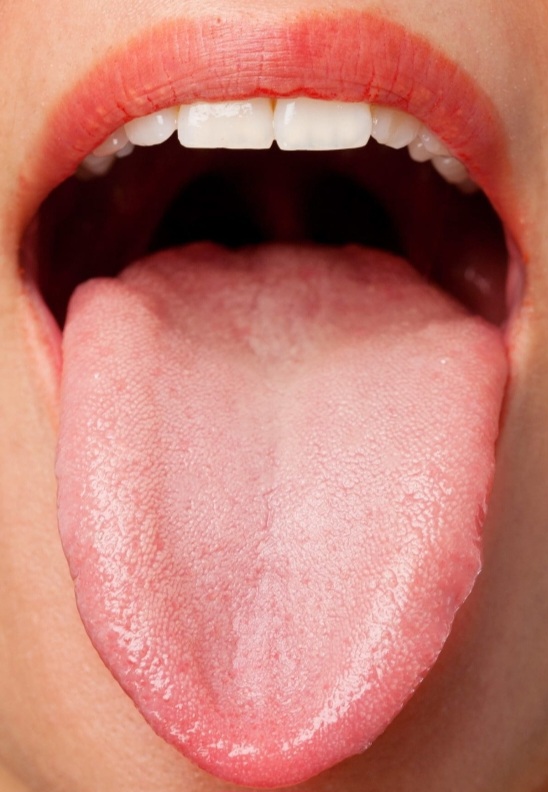
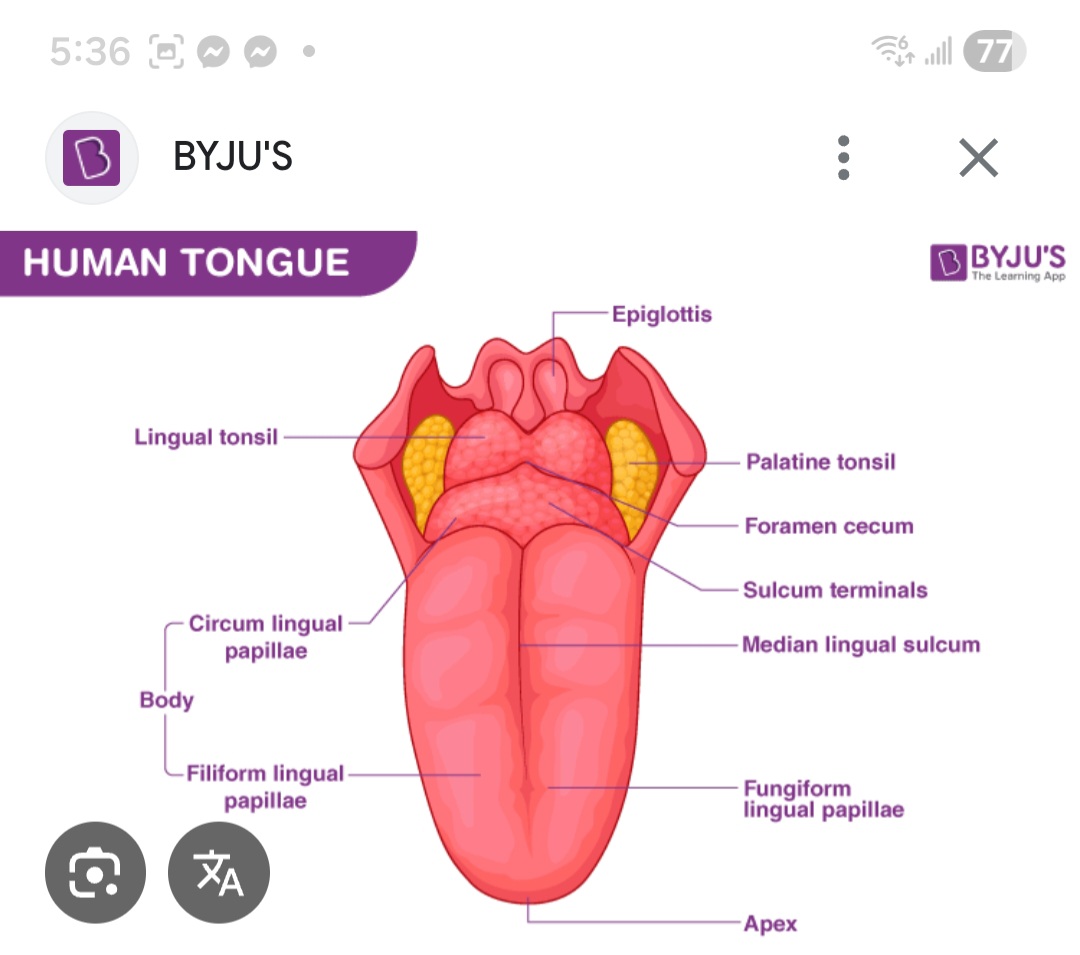
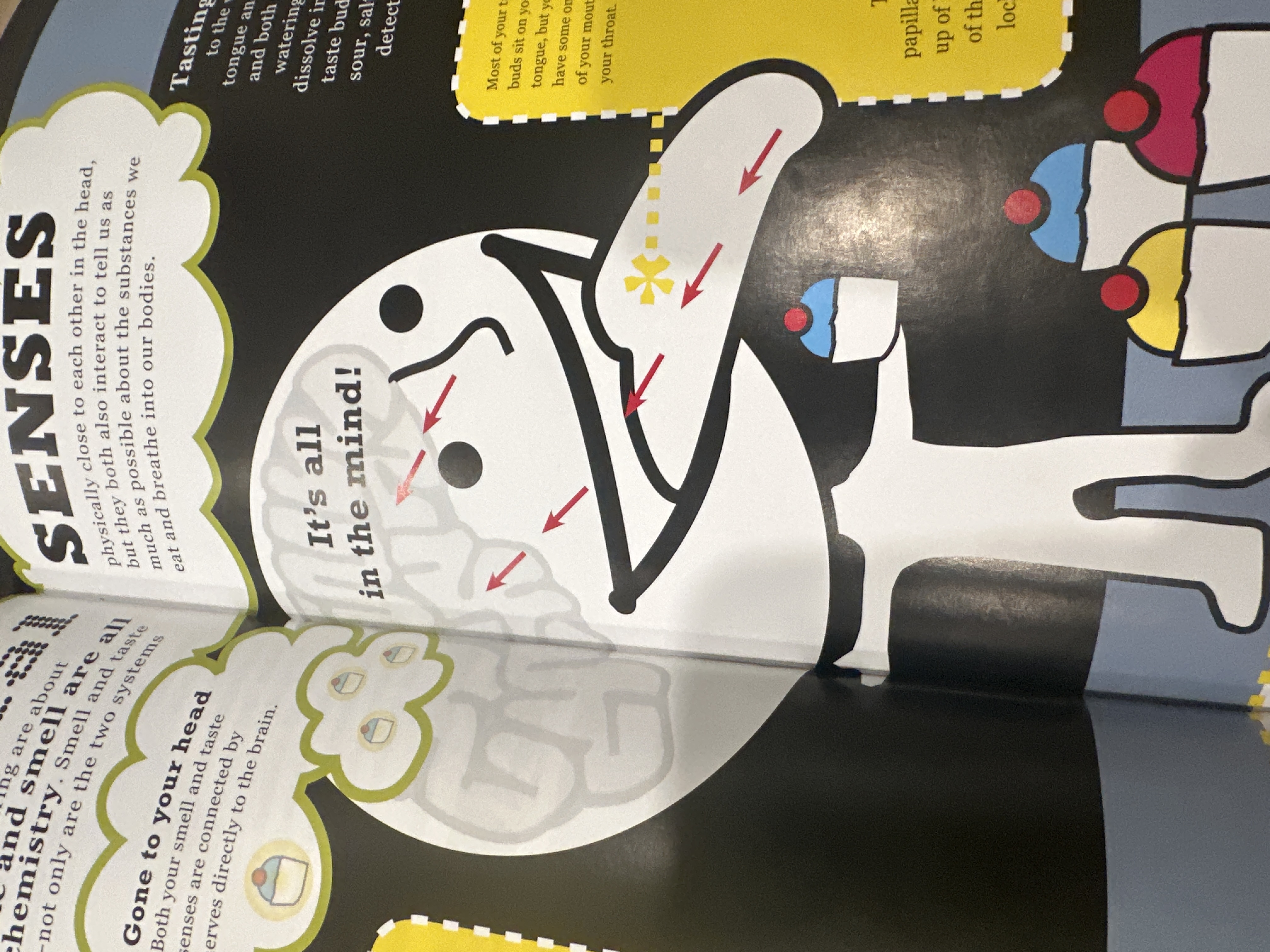
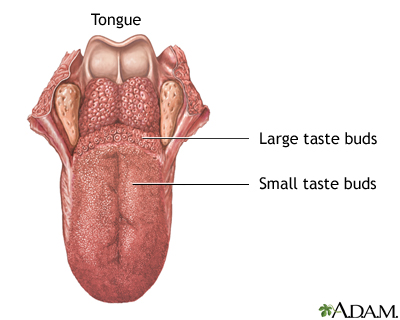
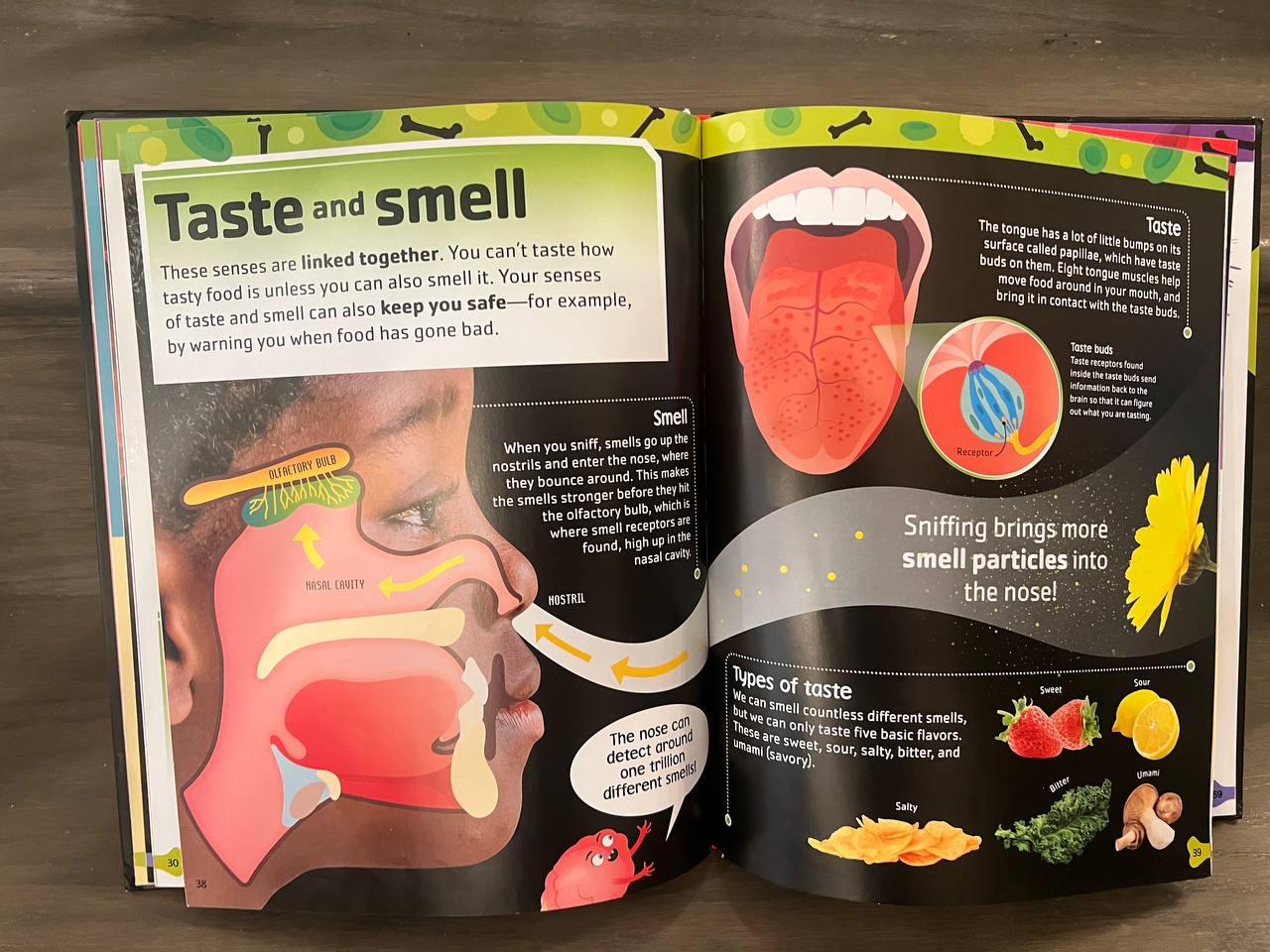
Most of your taste buds sit on your tongue, but you also have some on the roof of your mouth and in your throat. Tongue action the surface of the Tongue is covered by lots of tiny bumps, known as papillae. Between these bumps sit the taste buds. The taste buds are made up of a lot of sensory cells like segments in orange. Tiny hair on top of these cells extend upward and it is here where the dissolved molecules lock on.
محمد بشير
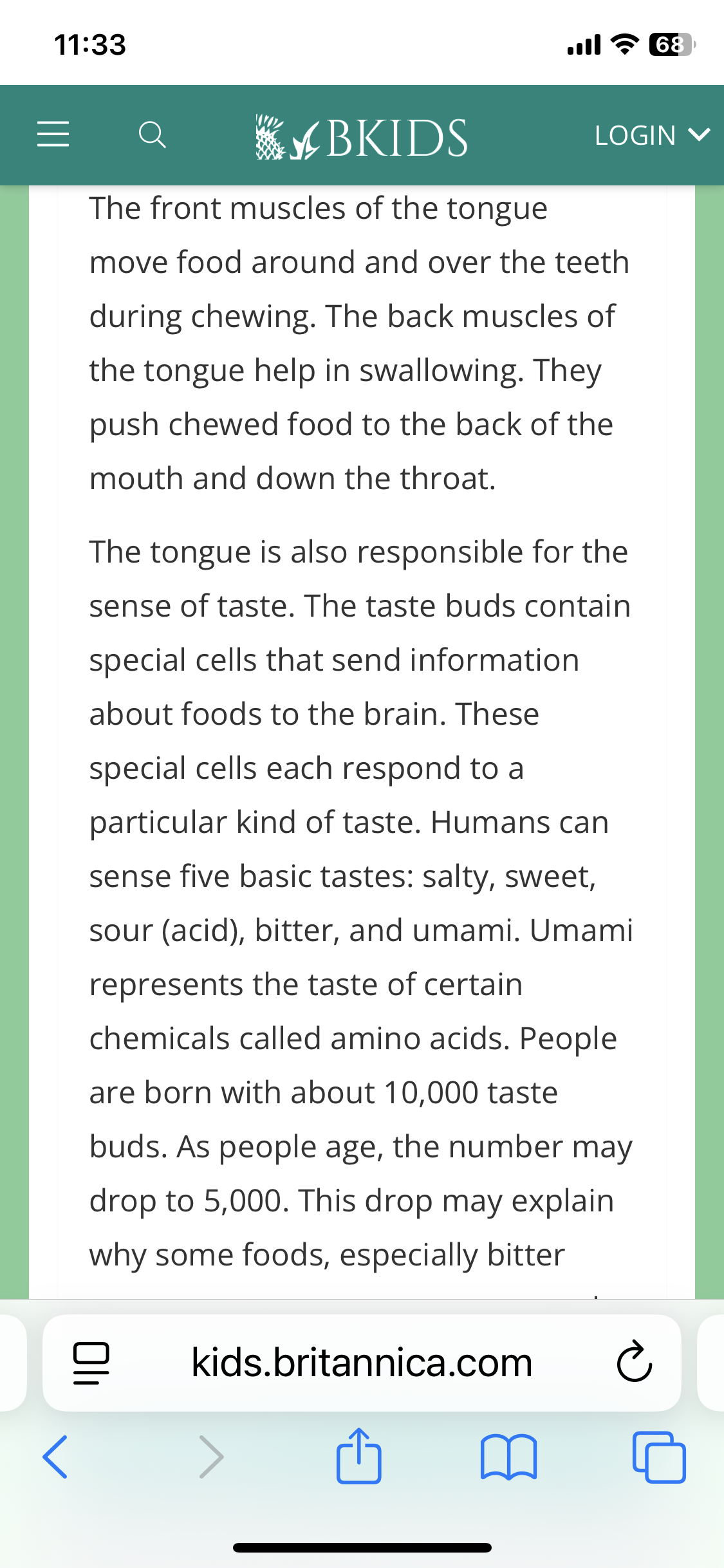
يولد الناس بحوالي 10,000 براعم تذوق. ومع التقدّم في العمر، قد ينخفض هذا العدد إلى حوالي
5,000. وقد يفسّر هذا الانخفاض
سبب عدم استساغة بعض الأطعمة، وخاصة الأطعمة المرّة.
5,000. وقد يفسّر هذا الانخفاض
سبب عدم استساغة بعض الأطعمة، وخاصة الأطعمة المرّة.
مهدي الاشيقر
Acquired tastes Our taste buds are more sensitive when we are younger, which explains why some children reacts strongly to some flavours than adults enjoy. As you get older, your taste buds lose the sensitivity and you even start liking vegetables
Nour Mawassi
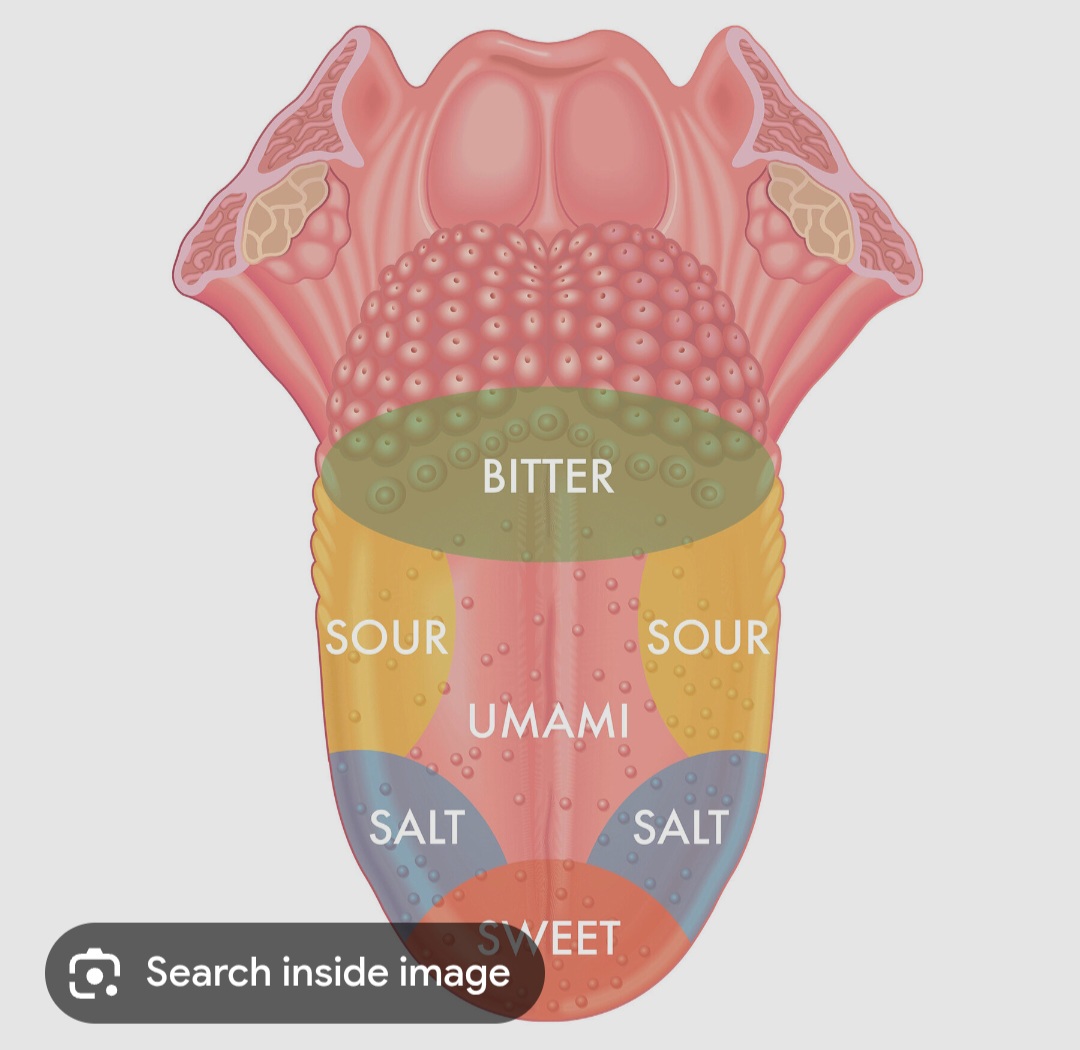
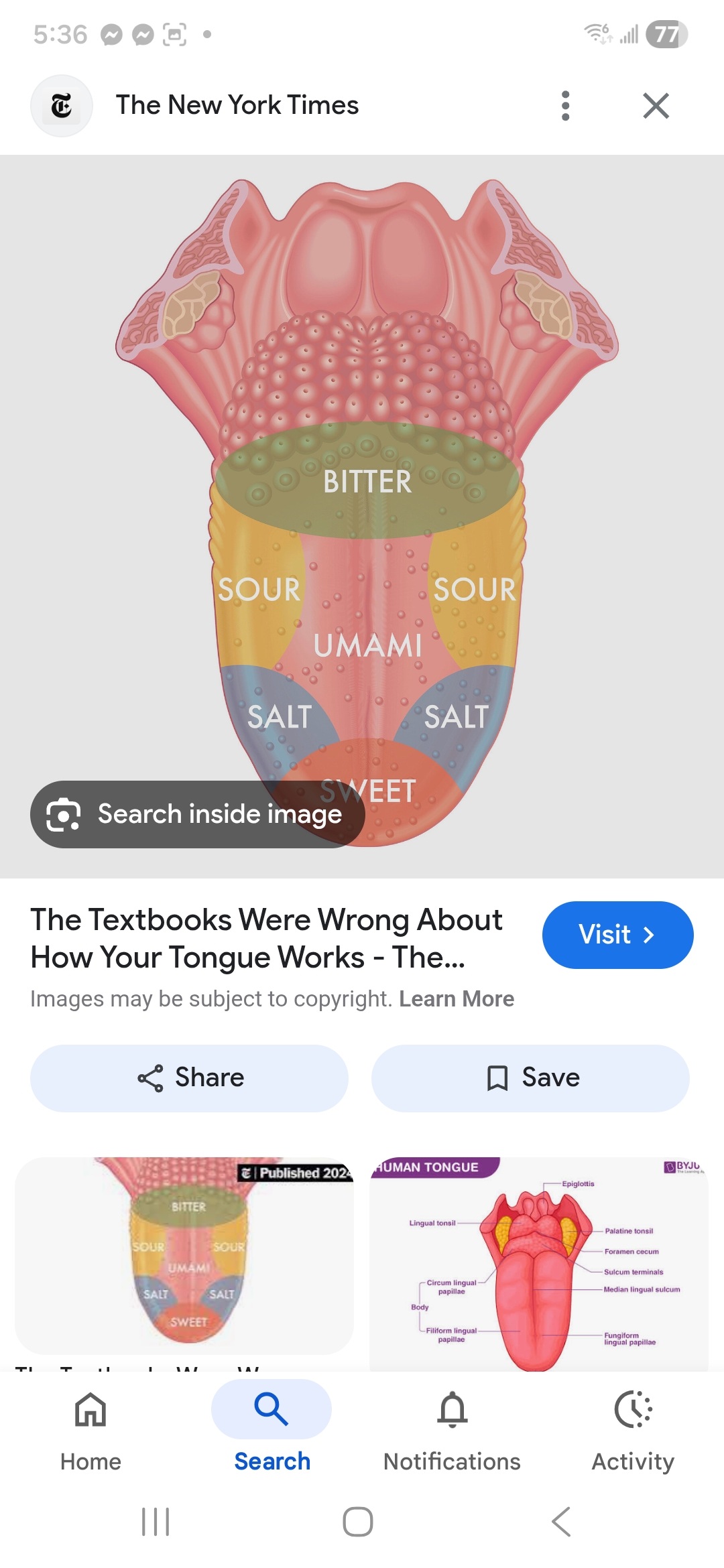
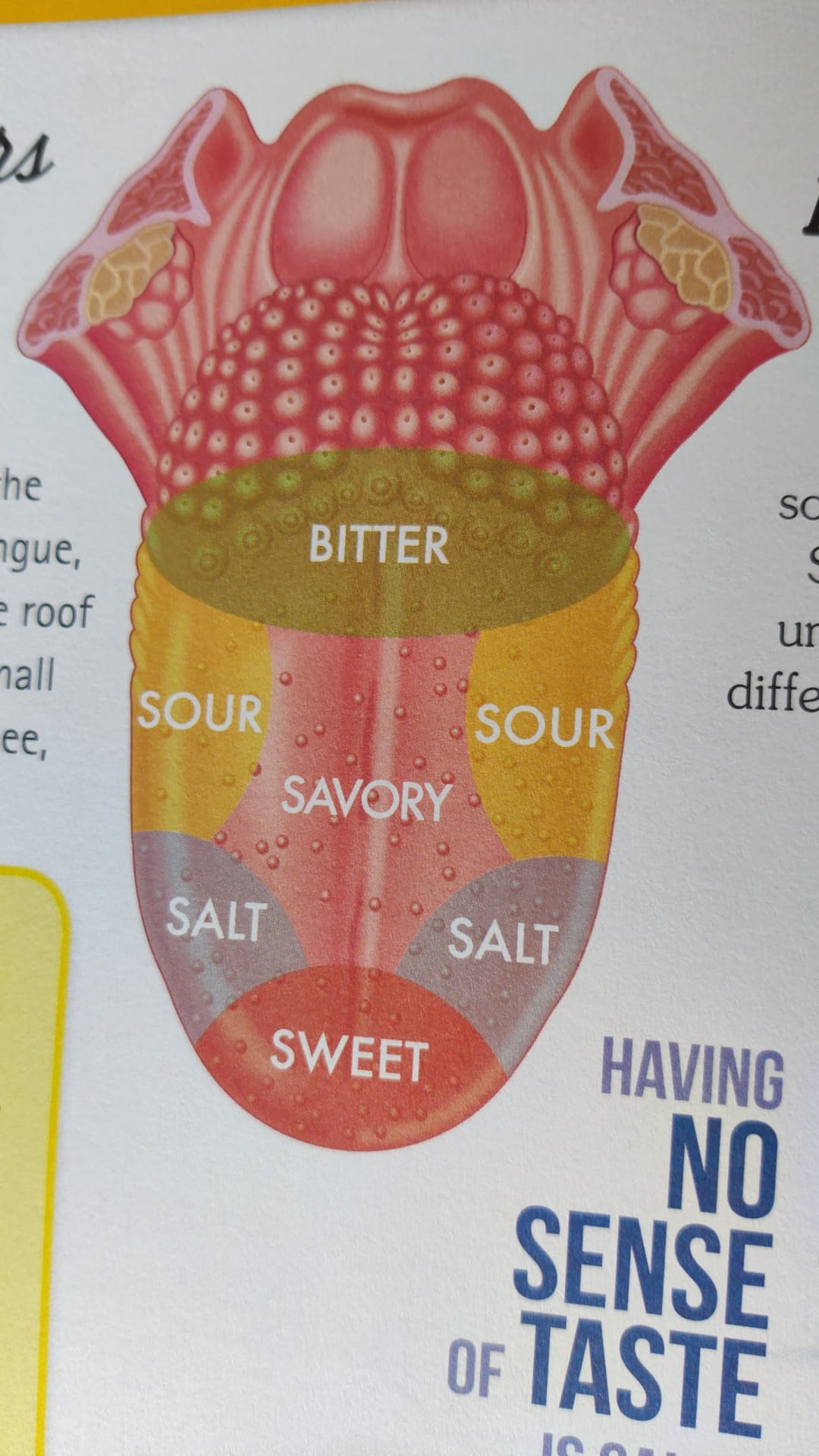
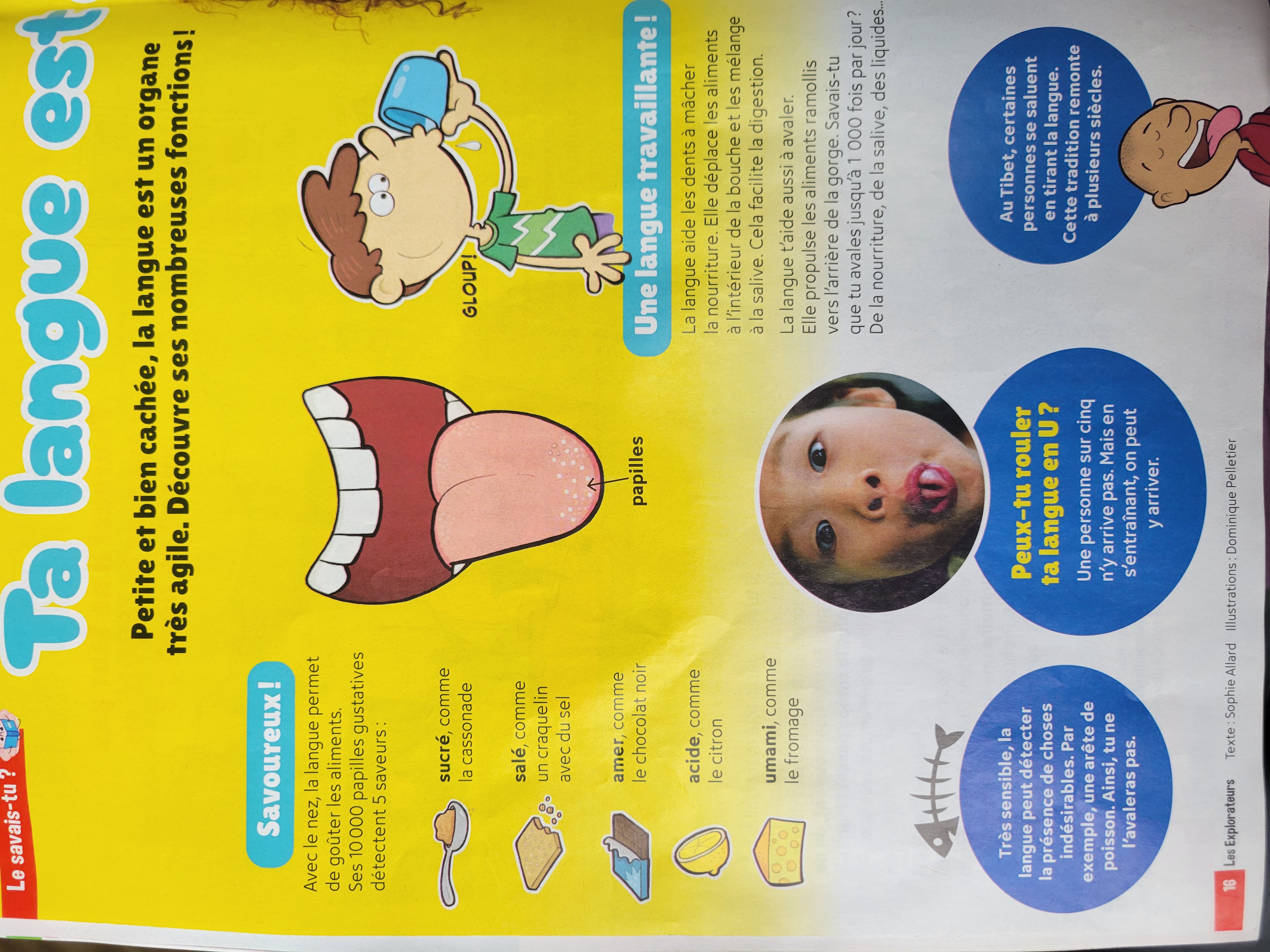
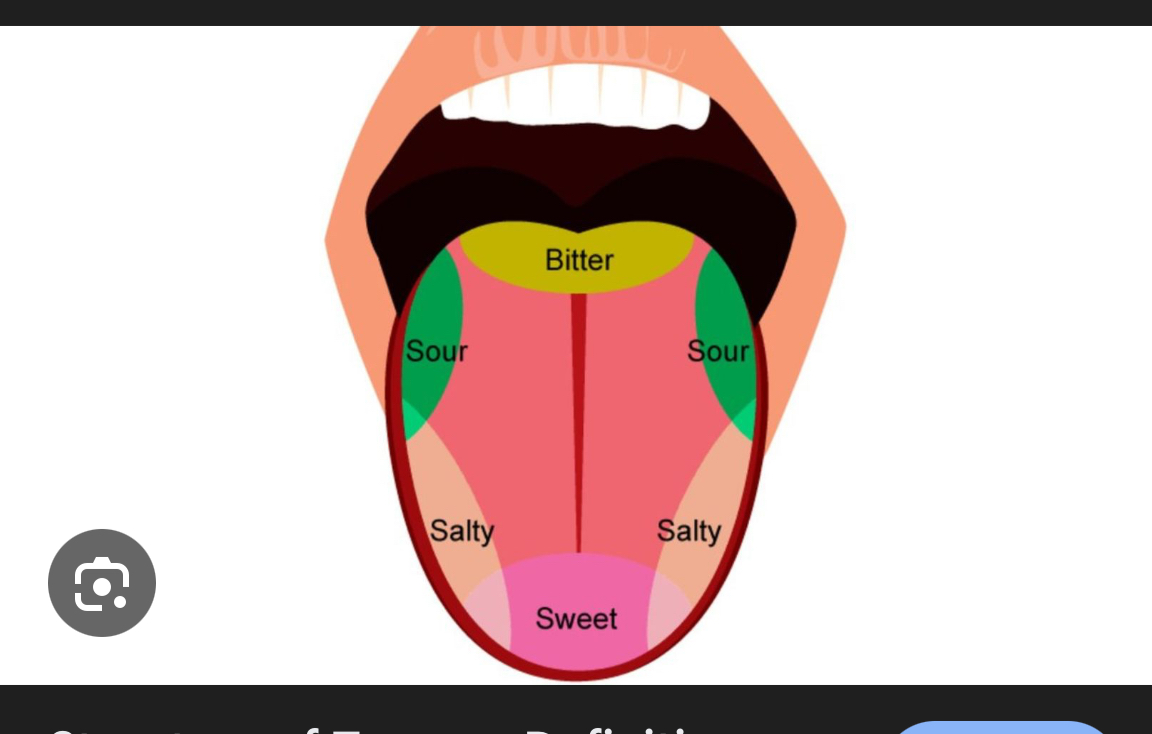
1)Il y a 5 saveurs de base, sucré, salé, acide, amer et umami. Il y a des espaces différentes sur notre langues qui sont capables de gouter la saveur qui leur est assigné.( photo a l'appuie)
2) Dans notre bouche, il y a 9000 papilles gustatives. Ce sont des petites cellules sensorielles que nous ne pouvons pas voir. Elles sont situées dans les petites bosses que nous pouvons voir( qui s'appellent aussi papilles).
2) Dans notre bouche, il y a 9000 papilles gustatives. Ce sont des petites cellules sensorielles que nous ne pouvons pas voir. Elles sont situées dans les petites bosses que nous pouvons voir( qui s'appellent aussi papilles).
Narjes Ghaddar
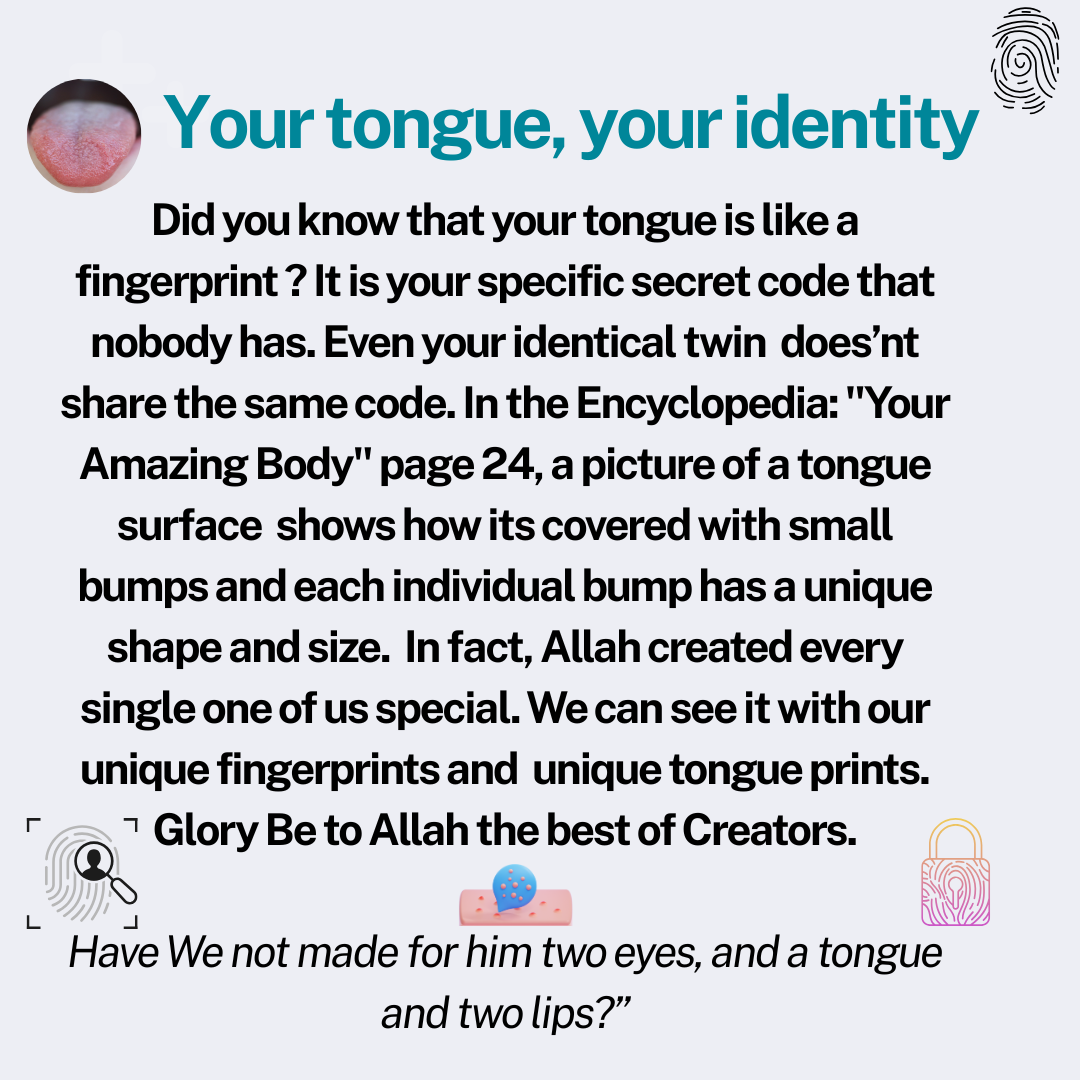
Your tongue, your identity
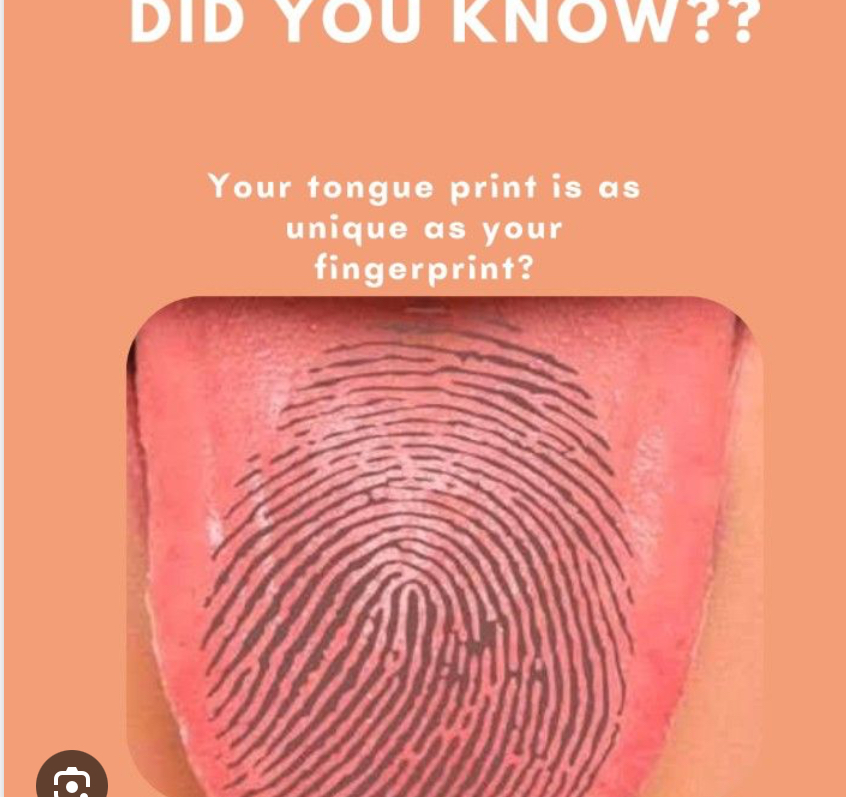
Did you know that your tongue is like a fingerprint ? It is your specific secret code that nobody has. Even your identical twin does’nt share the same code. In the Encyclopedia: "Your Amazing Body" page 24, a picture of a tongue surface shows how its covered with small bumps and each individual bump has a unique shape and size. In fact, Allah created every single one of us special. We can see it with our unique fingerprints and unique tongue prints. Glory Be to Allah the best of Creators.
Have We not made for him two eyes, and a tongue and two lips?”
Did you know that your tongue is like a fingerprint ? It is your specific secret code that nobody has. Even your identical twin does’nt share the same code. In the Encyclopedia: "Your Amazing Body" page 24, a picture of a tongue surface shows how its covered with small bumps and each individual bump has a unique shape and size. In fact, Allah created every single one of us special. We can see it with our unique fingerprints and unique tongue prints. Glory Be to Allah the best of Creators.
Have We not made for him two eyes, and a tongue and two lips?”
حسن شكرون
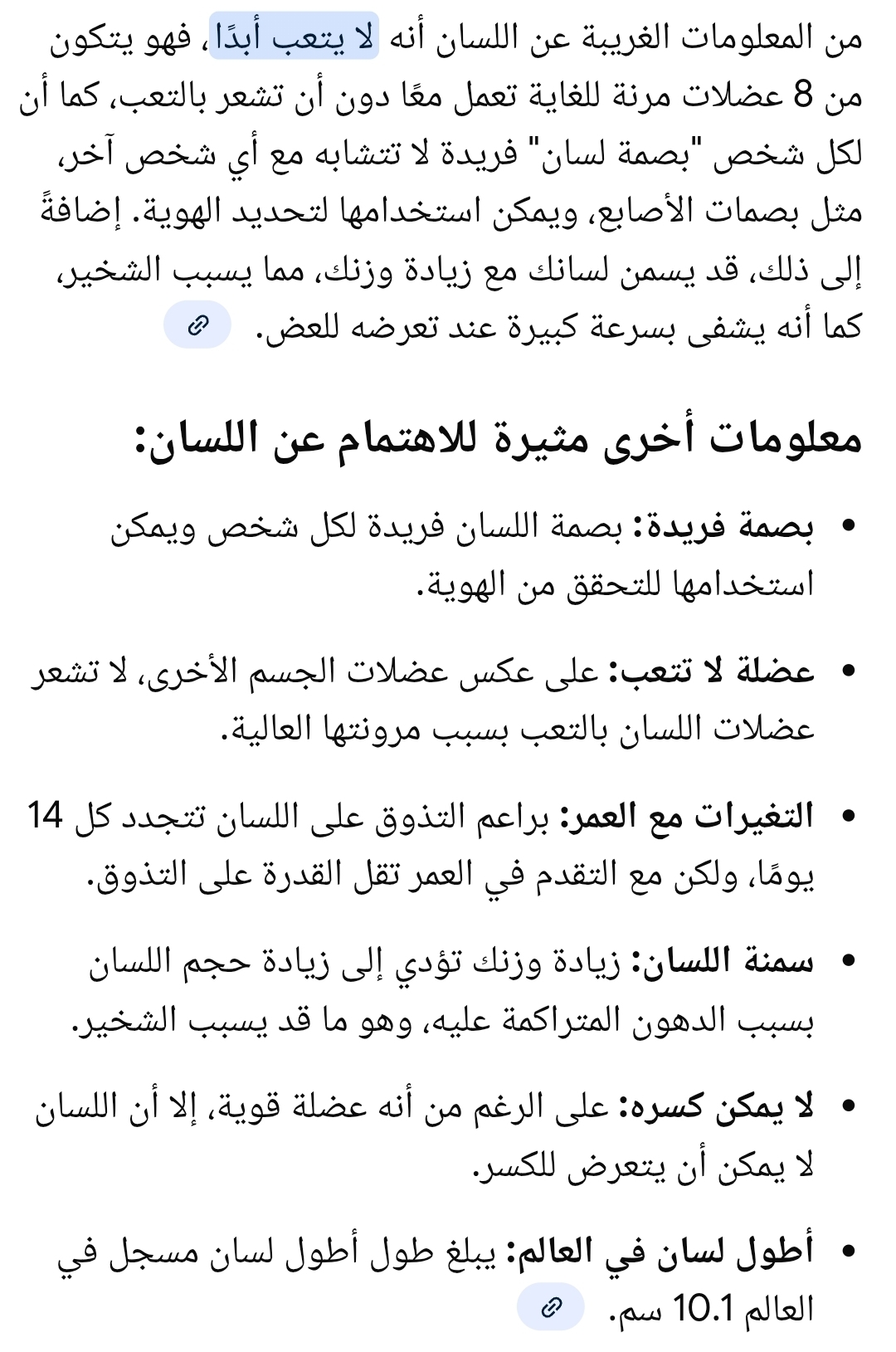
من المعلومات الغريبة عن اللسان أنه لا يتعب أبدًا، فهو يتكون من 8 عضلات مرنة للغاية تعمل معًا دون أن تشعر بالتعب، كما أن لكل شخص "بصمة لسان" فريدة لا تتشابه مع أي شخص آخر، مثل بصمات الأصابع، ويمكن استخدامها لتحديد الهوية. إضافةً إلى ذلك، قد يسمن لسانك مع زيادة وزنك، مما يسبب الشخير، كما أنه يشفى بسرعة كبيرة عند تعرضه للعض.
Layal Hammoud
La langue a sept muscles qui lui permettent de bouger dans toutes les directions.
La langue peut détecter la présence de choses indésirables.
La langue peut détecter la présence de choses indésirables.
Haidar Samhat
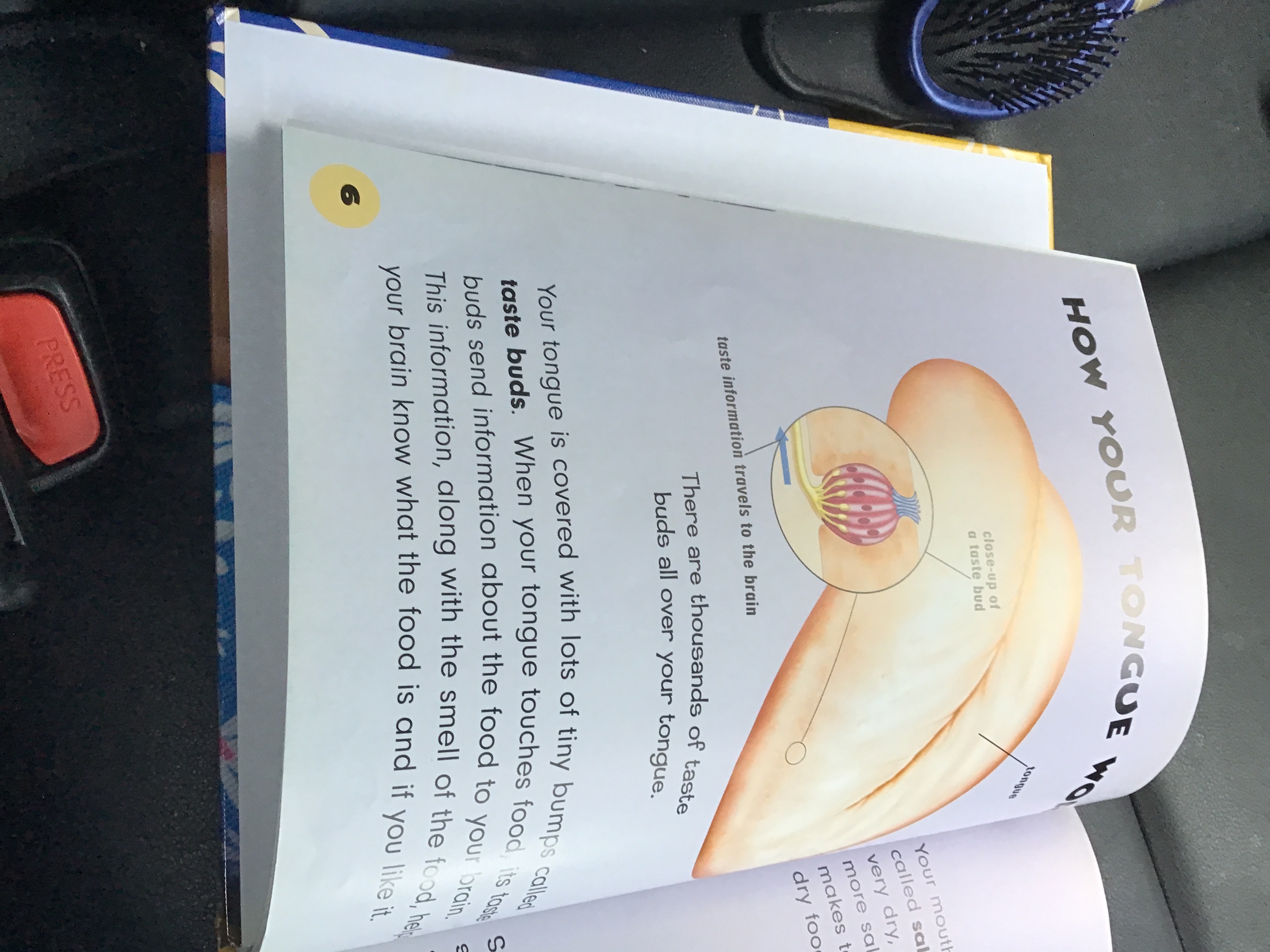
Your tongue is covered with lots of tiny bumps called taste buds. When your tongue touches food, its taste buds send information about the food to your brain. This information, along with the smell of the food, helps your brain know what the food is and if you like it.
Zahra Kafi
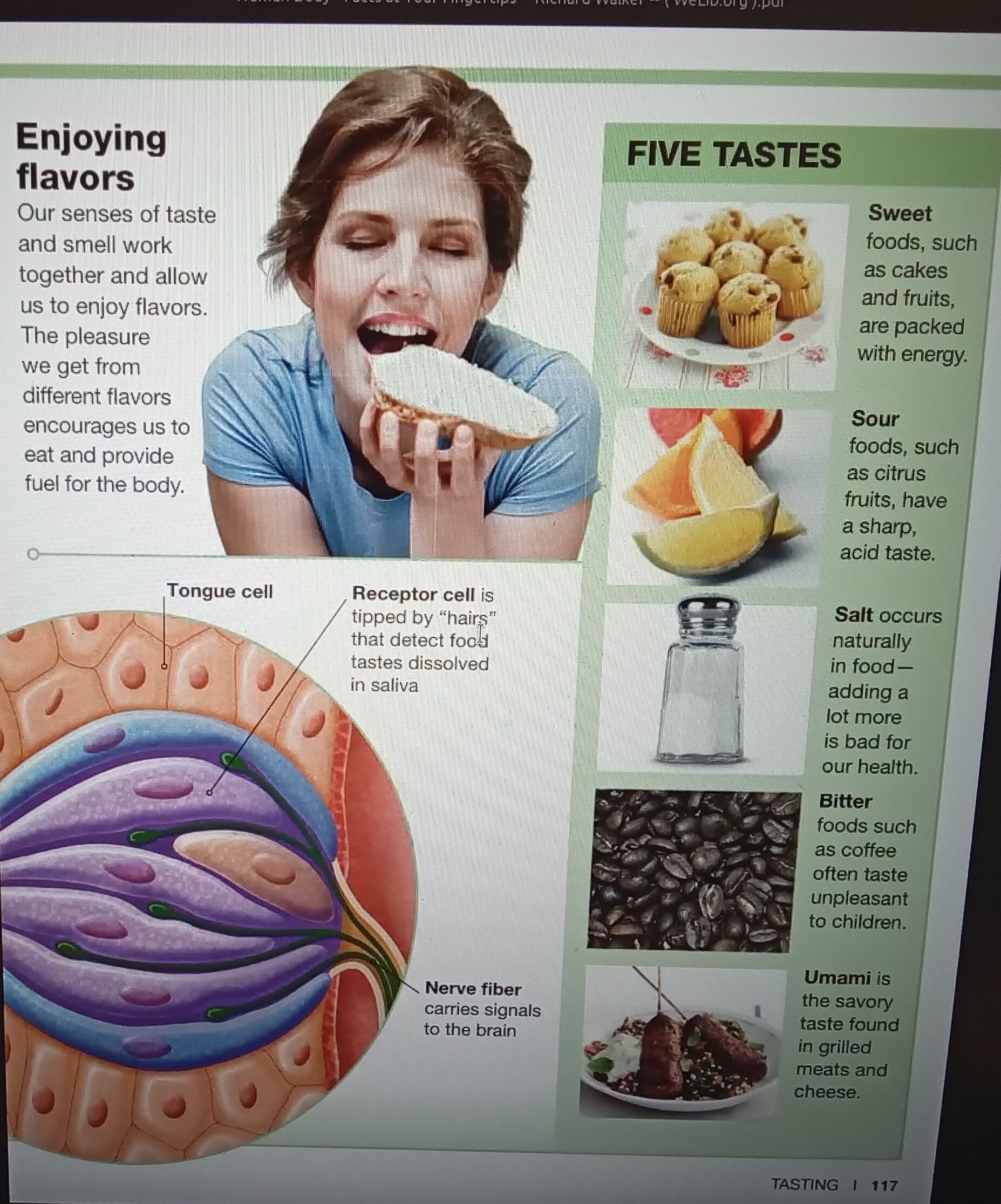
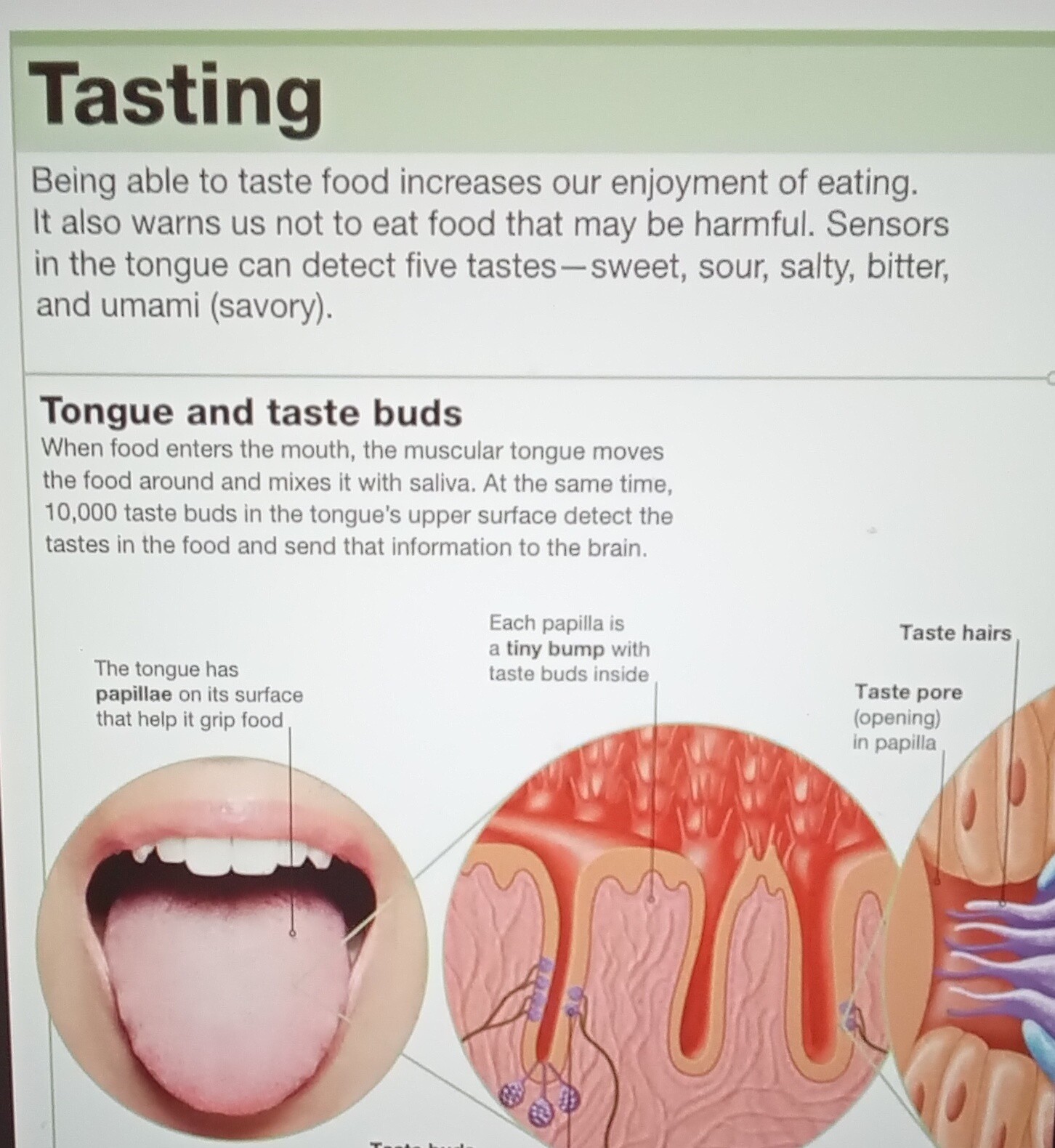
Being able to taste food increases our enjoyment of eating. It also warns us not to eat food that may be harmful. Sensors in the tongue can detect five tastes-sweet sour salty bitter and umami (savory). When food enters the mouth the muscular tongue moves the food around and mixes it with saliva. At the same time, 10,000 taste buds in the tongues of her surface detect The taste in the food and send the information to the brain. The tongue has papillae on its surface that help it grip food .each papilla is a tiny bump with taste buds inside. Taste buds contain receptor cells. Taste pore (opening) in papilla. Our symptoms of face and small work together and and allow us to enjoy flavors. Receptor cell is tipped by hairs and said that the kids food tastes dissolved in saliva. Nerve fiber carries signals to the brain. The pleasure we get from different flavors encourages us to eat and provide fuel for our body. The five tastes are sweets food such as cakes and fruits are packed with energy. Sour food such as citrus fruits have a sharp acid taste. Fault appears naturally in food adding a lot more is bad for our health. Better foods such as coffee often taste unpleasant to children umami is the savory taste found in grilled meat and cheese
Shayaan Raza
Our Tongue is Our Greatest Blessing:
Undoubtedly, the tongue and the ability to speak are the greatest blessings that God has bestowed on man in His Creation. This has been explicitly stated in the following verse
“He has created man: He has taught him speech (and intelligence).” [The Holy Qur’an, al-Rahman 55:3-4]
Speech has been described as meaning “uncovering” an object in Arabic. Our tongue expresses our inner thoughts and feelings. Our speech uncovers our inner thoughts and expresses what we think. If it was not for our ability to speak, we would be quiet just like animals and there would be no more discussion, explaining and understanding among men.
Though small in size, its influence is immense. It can be used for great good (e.g., remembrance of Allah/Dhikr, recitation of the Qur'an, enjoining good, consoling others) or immense evil (e.g., lying, slandering, backbiting, cursing).
Undoubtedly, the tongue and the ability to speak are the greatest blessings that God has bestowed on man in His Creation. This has been explicitly stated in the following verse
“He has created man: He has taught him speech (and intelligence).” [The Holy Qur’an, al-Rahman 55:3-4]
Speech has been described as meaning “uncovering” an object in Arabic. Our tongue expresses our inner thoughts and feelings. Our speech uncovers our inner thoughts and expresses what we think. If it was not for our ability to speak, we would be quiet just like animals and there would be no more discussion, explaining and understanding among men.
Though small in size, its influence is immense. It can be used for great good (e.g., remembrance of Allah/Dhikr, recitation of the Qur'an, enjoining good, consoling others) or immense evil (e.g., lying, slandering, backbiting, cursing).
Hizber Abidi
What I Learned
Animal tongues are amazing! They help animals eat, clean, and survive in different ways. From the Gila monster’s smell-sensing tongue to the penguin’s bristly tongue, every tongue is special:
Gila Monster
Did you know the Gila monster has a forked tongue? That means it splits into two tips! This helps the Gila monster smell in 3D. Each tip picks up smells from the air, so the Gila can figure out where the smell is coming from. Cool, right?
Hippo
Hippos have huge tongues! Scientists studied two hippos:
A grown-up hippo had a tongue 24 inches long (that’s 60 cm!).
A young hippo had a tongue 18 inches long (45 cm!).
Hippo tongues are still a mystery, but they are super big and strong!
Lion
Lions use their tongues like a hairbrush! Their tongues have tiny spines called papillae. These spines help lions clean their fur and spread saliva, which cools them down. Fun fact: Cats (including lions) can’t taste sweetness because their tongues don’t have the right sensors for sugar!
Penguin
Which animal has a tongue with more bristles than a hairbrush? Penguins!
Their tongues have lots of bristles made of keratin (the same stuff as our hair and nails). These bristles help penguins grab slippery fish and krill. Penguins don’t have taste buds, but they sure have awesome tongues!
Fly
That thing hanging from a fly’s mouth isn’t really a tongue—it’s called a labellum. It helps the fly taste food. Flies use their straw-like mouth to slurp up food, but first they spit digestive juices on it to make it mushy.
Animal tongues are amazing! They help animals eat, clean, and survive in different ways. From the Gila monster’s smell-sensing tongue to the penguin’s bristly tongue, every tongue is special:
Gila Monster
Did you know the Gila monster has a forked tongue? That means it splits into two tips! This helps the Gila monster smell in 3D. Each tip picks up smells from the air, so the Gila can figure out where the smell is coming from. Cool, right?
Hippo
Hippos have huge tongues! Scientists studied two hippos:
A grown-up hippo had a tongue 24 inches long (that’s 60 cm!).
A young hippo had a tongue 18 inches long (45 cm!).
Hippo tongues are still a mystery, but they are super big and strong!
Lion
Lions use their tongues like a hairbrush! Their tongues have tiny spines called papillae. These spines help lions clean their fur and spread saliva, which cools them down. Fun fact: Cats (including lions) can’t taste sweetness because their tongues don’t have the right sensors for sugar!
Penguin
Which animal has a tongue with more bristles than a hairbrush? Penguins!
Their tongues have lots of bristles made of keratin (the same stuff as our hair and nails). These bristles help penguins grab slippery fish and krill. Penguins don’t have taste buds, but they sure have awesome tongues!
Fly
That thing hanging from a fly’s mouth isn’t really a tongue—it’s called a labellum. It helps the fly taste food. Flies use their straw-like mouth to slurp up food, but first they spit digestive juices on it to make it mushy.
Seedra Humadi
The human tounge can perform more than 5000 movements per day while speaking ،chewing or swallowing.It also has a unique tounge print that differs from one person to another similar to finger print.
Maarif Akbar
The tongue is a muscular organ in your mouth used for taste, processing food, speech and also helps in cleaning the mouth. A tongue should be kept clean by using a toothbrush or tongue scraper. A healthy tongue is pink in colour, however if it changes colour or looks odd, then it is best to check with a doctor.
Hoorain Rizvi
The tongue is a an extraordinary muscle of human body and indeed a great blessing of Allah swt.
It has multiple functions not only for humans but other creatures also.
It helps us to talk ,swallow food and taste the food .It help us communicate to others and teaches to nicely speak to our family members and strangers.
We need to think before we speak as it has impact on other’s life.
Imam Ali (A.S) said:
Nothing is more beneficial for a human being than guarding the tongue and doing good to others.
54ـ لاشَيْءَ أعْوَدُ عَلَى الإنْسانِ مِنْ حِفْظِ اللِّسانِ، وَبَذْلِ الإحْسانِ.
It has multiple functions not only for humans but other creatures also.
It helps us to talk ,swallow food and taste the food .It help us communicate to others and teaches to nicely speak to our family members and strangers.
We need to think before we speak as it has impact on other’s life.
Imam Ali (A.S) said:
Nothing is more beneficial for a human being than guarding the tongue and doing good to others.
54ـ لاشَيْءَ أعْوَدُ عَلَى الإنْسانِ مِنْ حِفْظِ اللِّسانِ، وَبَذْلِ الإحْسانِ.
Hussein Alkharsan
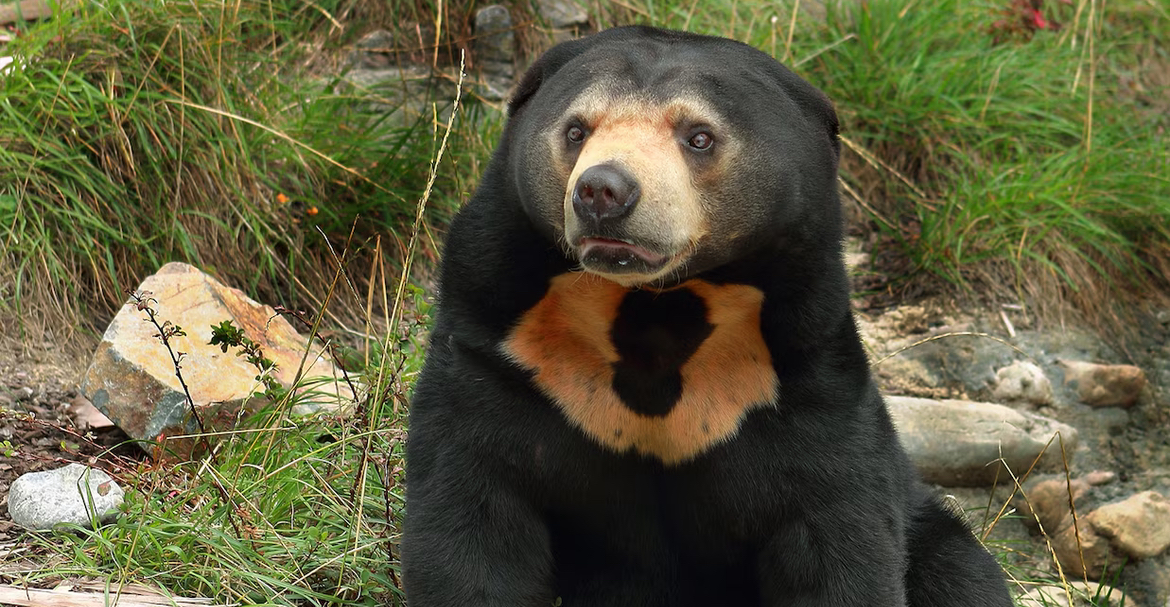
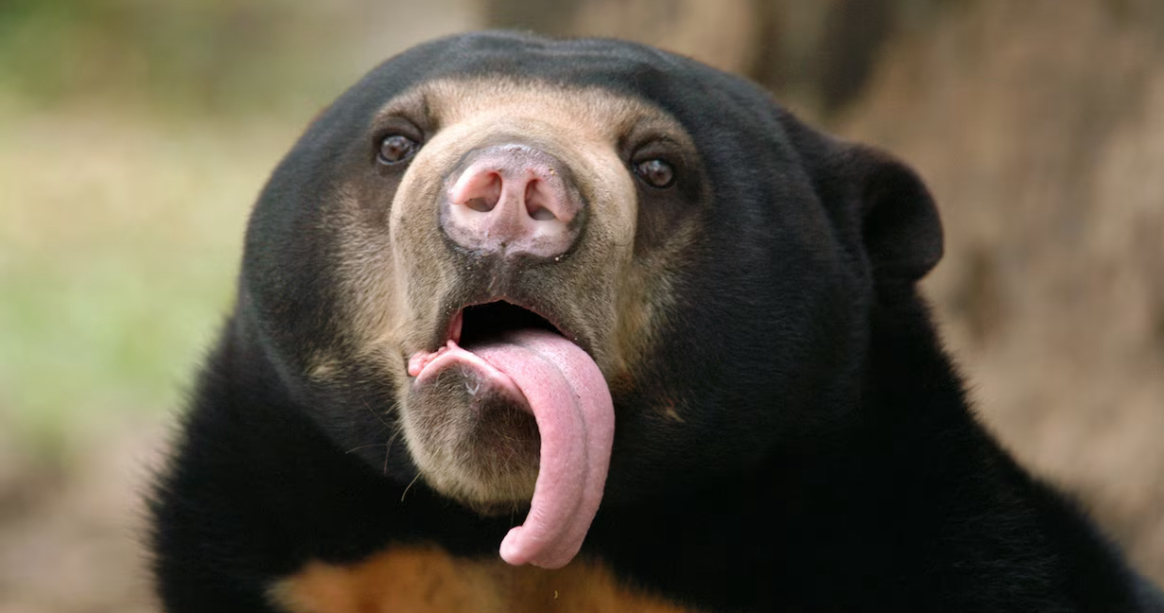
Wandering through a dense forest in southern China, a sun bear comes across a log. He gives it a sniff and then opens his mouth. A nearly ten-inch-long tongue rolls out! Maneuvering the massive tongue under the log, the bear slurps up the tasty insects that crawl beneath until his belly is full.
Ali Alkheichen
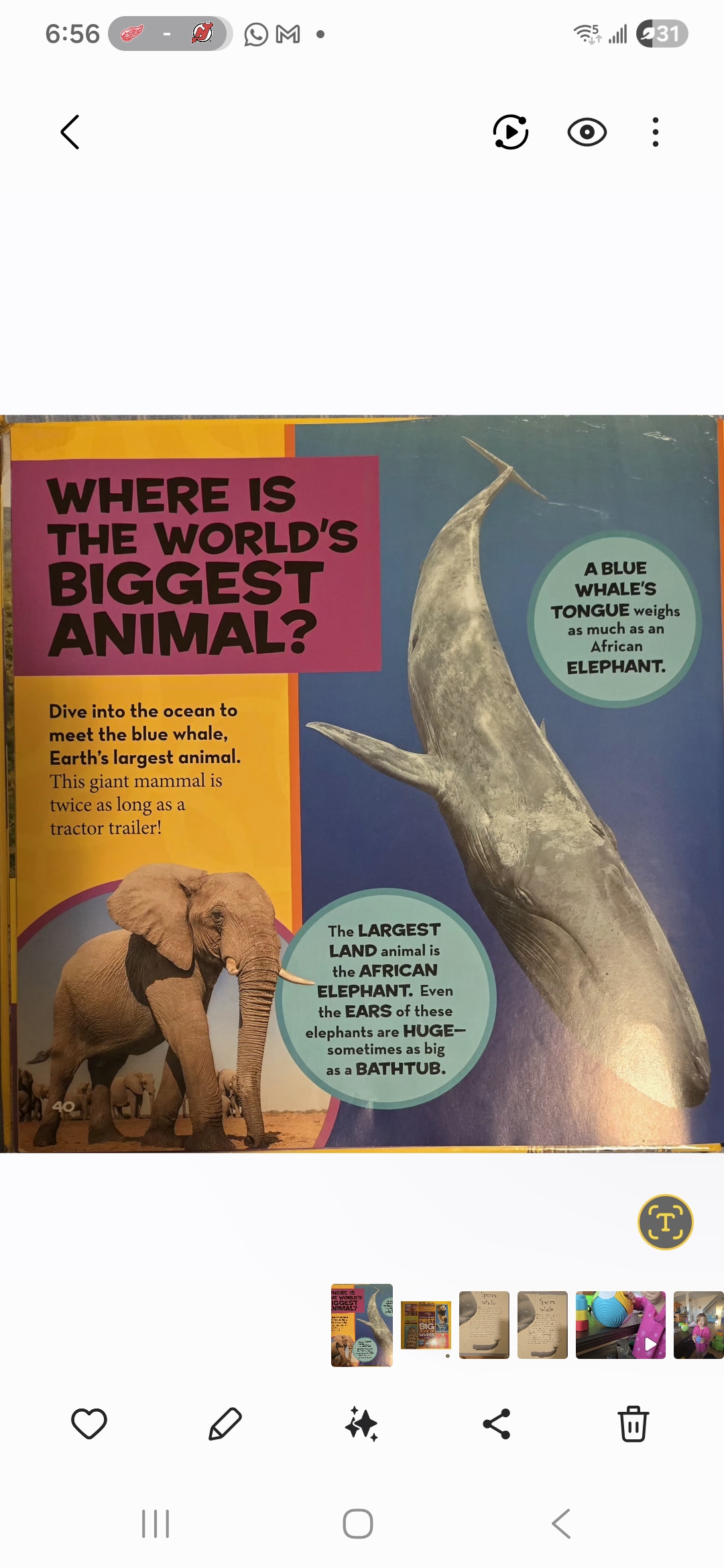
A blue whale's tongue weighs as much as an African elephant
زهراء طالب
السمنة تجعل اللسان أكبر عبر تراكم الدهون عليه مما يعيق التنفس
زينب عبد الأمير
اللسان عضوٌ مهمٌّ في الجسم، يُساعدنا على الكلام، وتذوق النكهات المختلفة، وتحريك الطعام في أفواهنا ليسهل بلعه. ومن أبرز الحقائق عن لسان الإنسان أنه يُشبه بصمة الإصبع. بصمات الأصابع فريدةٌ جدًا؛ فلكل شخص بصمةٌ فريدة، وكذلك لسانه. سبحان الله الذي أتقن كل شيء
محمد حسن عبد الأمير
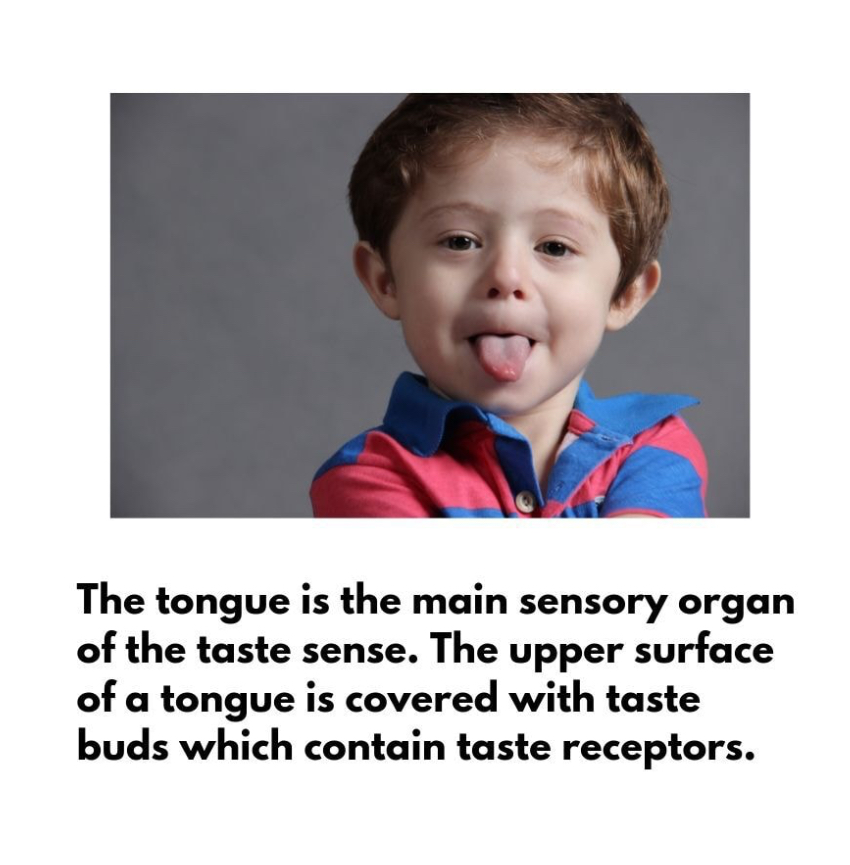
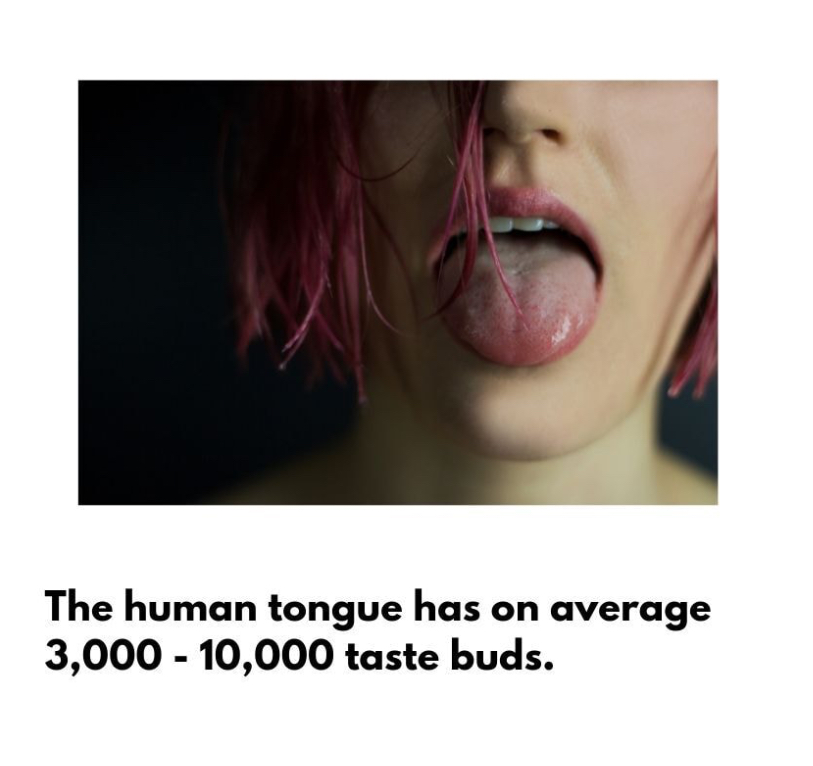
اللسان هو العضو الحسي الرئيسي لحاسة التذوق. سطحه العلوي مغطى ببراعم تذوق تحتوي على مستقبلات تذوق. يحتوي لسان الإنسان العادي على ما بين 3000 و10000 برعم تذوق
Batoul ElHaj
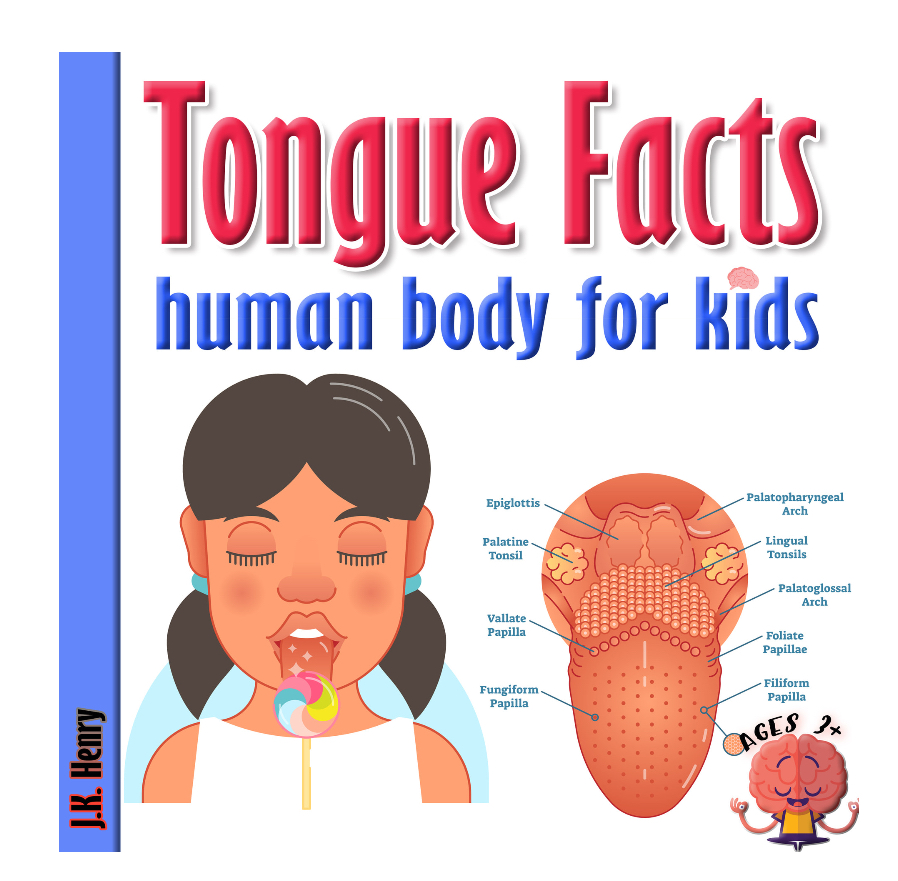
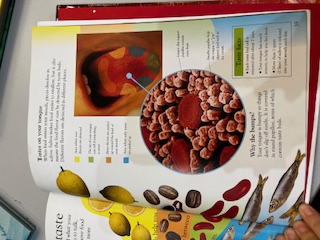
Your tongue is bumpy, so things don't slip off easily. It is covered in round papillae, some of which contain taste buds.
Hassan Abid
.لللسان العديد من النتوءات الصغيرة تُسمى حلمات-
.ثمانية عضلات في اللسان تحرك الطعام وتوصله إلى براعم التذوق-
.تقوم مستقبلات الطعم الموجودة داخل براعم التذوق بإرسال المعلومات إلى الدماغ حتى يتمكن من معرفة ما تتذوقه-
.ثمانية عضلات في اللسان تحرك الطعام وتوصله إلى براعم التذوق-
.تقوم مستقبلات الطعم الموجودة داخل براعم التذوق بإرسال المعلومات إلى الدماغ حتى يتمكن من معرفة ما تتذوقه-
فاطمة بشير
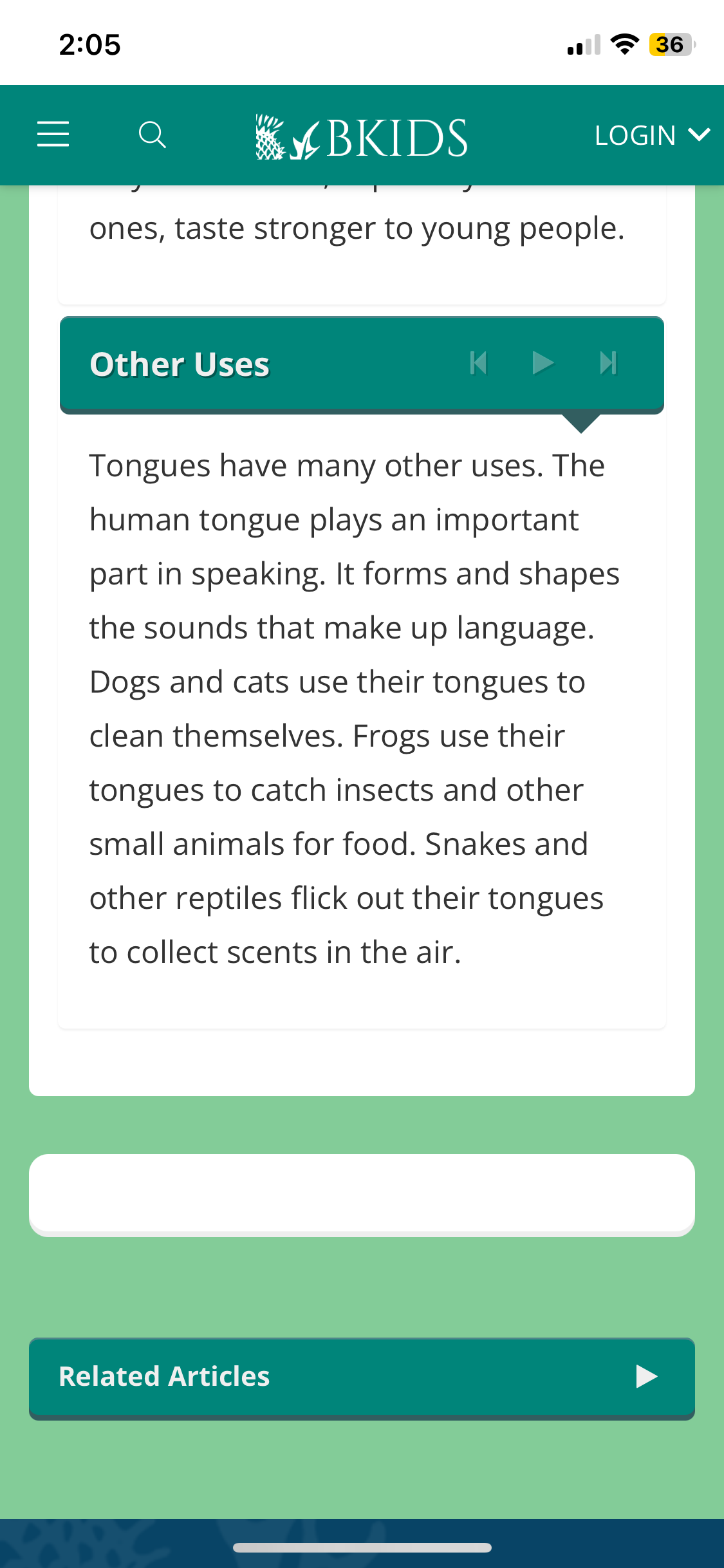
Tongues have many other uses. The human tongue plays an important part in speaking. It forms and shapes the sounds that make up language. Dogs and cats use their tongues to clean themselves. Frogs use their tongues to catch insects and other small animals for food. Snakes and other reptiles flick out their tongues to collect scents in the air.
batoul kaddouri
La langue commence à se former dès la 4 semaine de la grossesse .Elle est le premier organe opérationnel dans le ventre de la mère .Cela ne serait possible sans la sagesse de Dieu ,comme le dit le verset suivant: Gloire à Dieu, qui a mené toutes choses à la perfection. Merci à Dieu qui nous a donné cet organe très utile.

Fatima Alkheichen
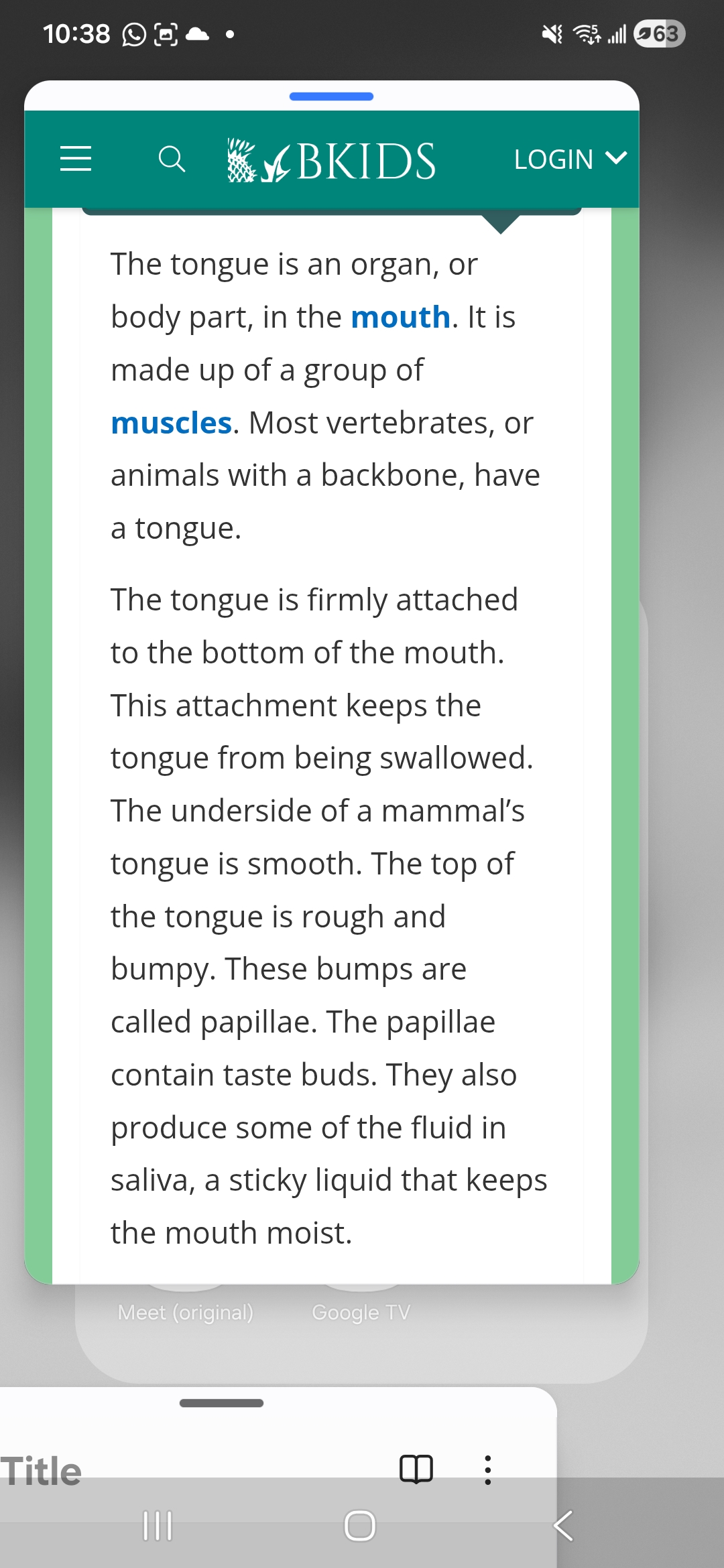
The tongue is firmly attached to the bottom of the mouth. This attachment keeps the tongue from being swallowed.
Amir Sadeq
The tongue is a wonderful organ. It allows you to talk, taste, suck, and eat. Not only humans have it! For example:
The frog and chameleon have long tongues that can be moved at extremely high speeds, and allows them to eat.
Pollinators have a tube-shaped tongue that allows them to drink nectar.
Cats and dogs use it to drink milk and clean their fur.
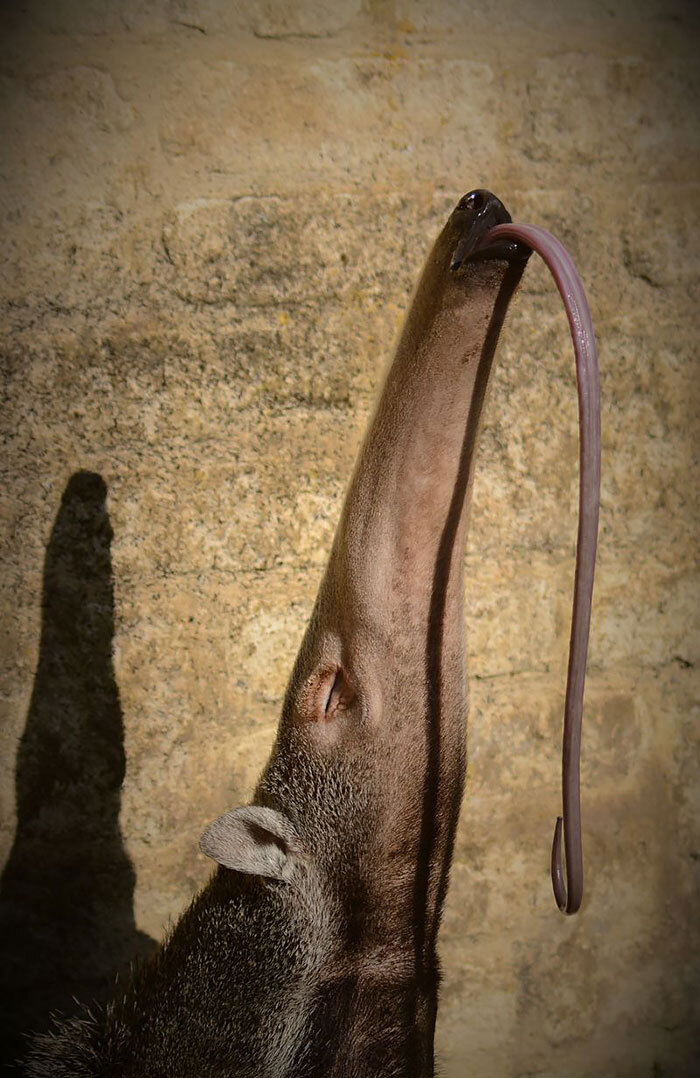
Ant-eaters stick their extremely long one down ant burrows to eat them.
Humans use it to eat, talk, and all sorts of other things.
We must really thank Him whose Name is Glorified more than we do, for it can never repay all His kindnesses and mercies towards us.
This tongue, a perfect piece of flesh containing mucles and nerves perfectly arranged, is but one of His countless bounties towards us.
The frog and chameleon have long tongues that can be moved at extremely high speeds, and allows them to eat.
Pollinators have a tube-shaped tongue that allows them to drink nectar.
Cats and dogs use it to drink milk and clean their fur.
Ant-eaters stick their extremely long one down ant burrows to eat them.
Humans use it to eat, talk, and all sorts of other things.
We must really thank Him whose Name is Glorified more than we do, for it can never repay all His kindnesses and mercies towards us.
This tongue, a perfect piece of flesh containing mucles and nerves perfectly arranged, is but one of His countless bounties towards us.